You’ve noticed a space, a tooth that has shifted, or a smile you’d like to change. Clear aligners may be worth discussing—but the best starting point is your bite, not a photo of someone else’s result.
It’s about more than straight-looking teeth
Orthodontic care considers how upper and lower teeth meet. A healthy bite supports everyday activities such as chewing and speaking. Crowding, spacing, and teeth that don’t meet properly may all be reasons to discuss treatment. Adults can seek orthodontic care too; it isn’t limited to teenagers. [2]
How do aligners work?
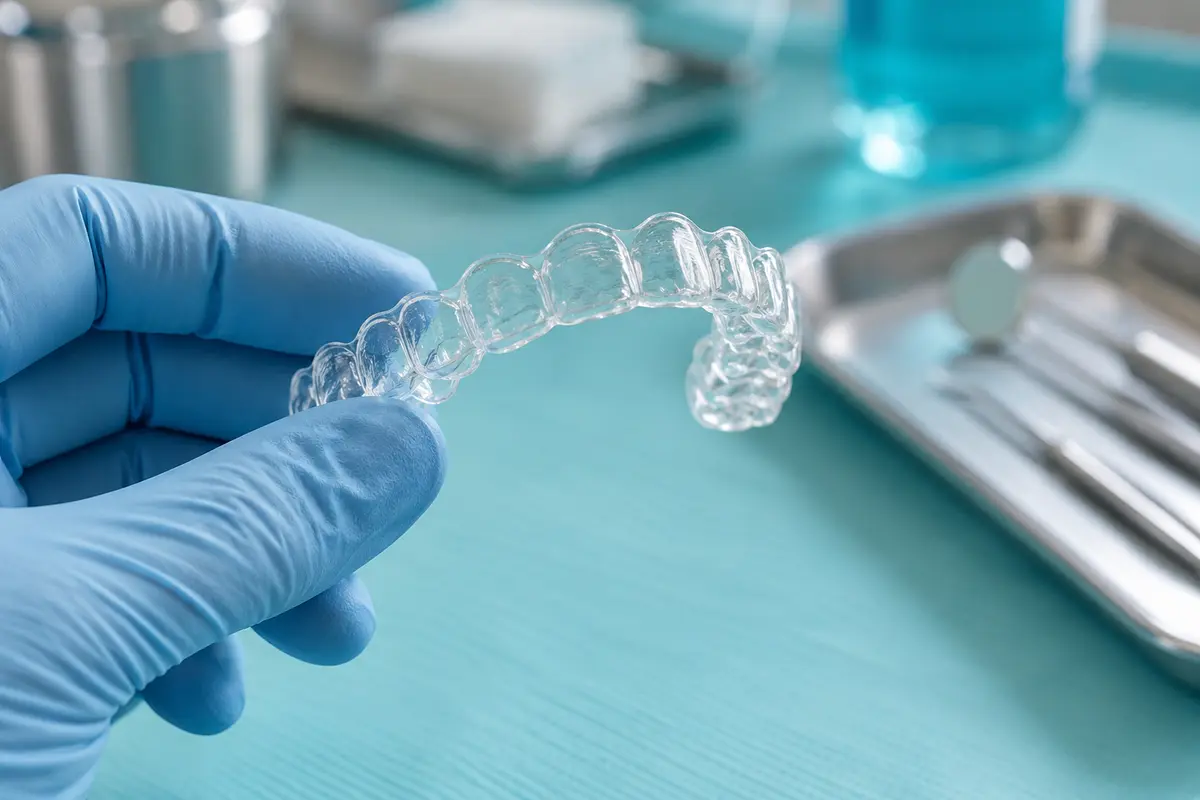
A series of custom removable trays moves teeth gradually. An evaluation considers your teeth, bite, and dental history; scans or impressions help with planning. Aligners can address some mild-to-moderate problems, but more complex situations may need braces or another approach. They are prescription devices that need a licensed dentist’s or orthodontist’s supervision. [1]
What changes in your everyday routine?
The trays come out for eating and cleaning your teeth, but wearing them consistently is part of treatment. Follow the schedule your provider gives you rather than deciding when to switch trays yourself. Missed wear can affect progress. Ask how appointments fit into your workday, what to do if a tray is lost, and how your progress will be checked. [1]
Why the retainer conversation matters
Finishing the last tray doesn’t mean forgetting about your teeth. Retainers help preserve the results of orthodontic treatment. Make sure you understand your retention plan before starting, including wear instructions, replacement arrangements, and what to do if something stops fitting. [2]
Ask before you commit
- What are we trying to change about my bite?
- Are aligners appropriate, or would another treatment be better?
- What happens if my teeth don’t move as expected?
- Does the estimate include retainers and follow-up care?
Bring your questions to QLIDC. We’ll talk about your goals and help you understand the next step—not assume every smile needs the same plan.
Sources & further reading
General educational information only; not a substitute for an examination or personalized dental advice.